Custom 3D-Printed TPU Pads and Multi-Material Horseshoes:
How Material Choices Enhance Comfort for Compromised Hooves
Horses with compromised hooves — including those affected by laminitis/founder, white line disease, or navicular-type pain — often require more than a standard off-the-shelf horseshoe to improve comfort and functional stability. Recent advances in multi-material shoeing allow farriers to combine structural support with targeted cushioning, addressing different functional needs independently.
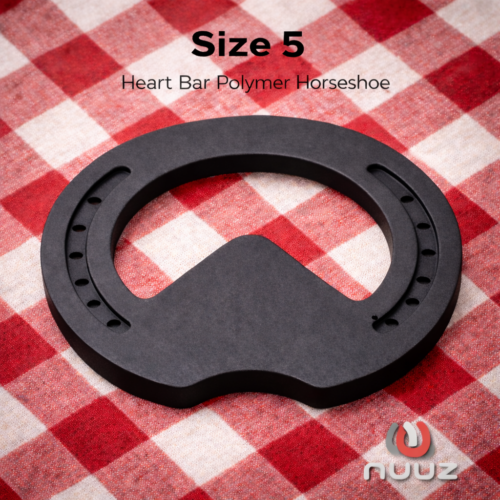
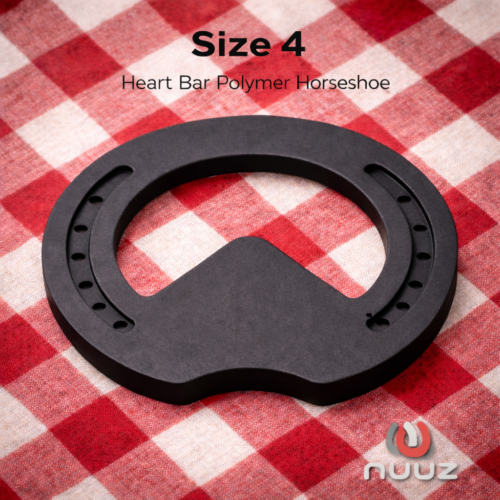
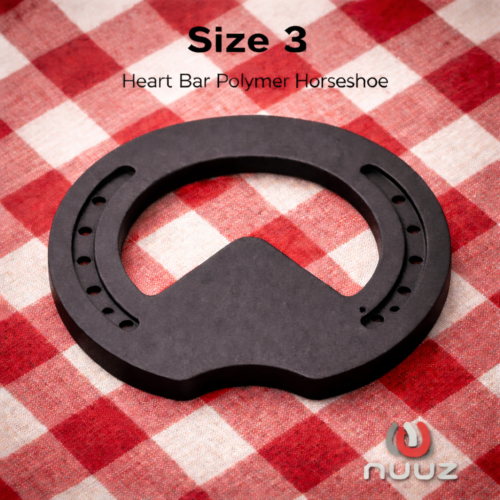
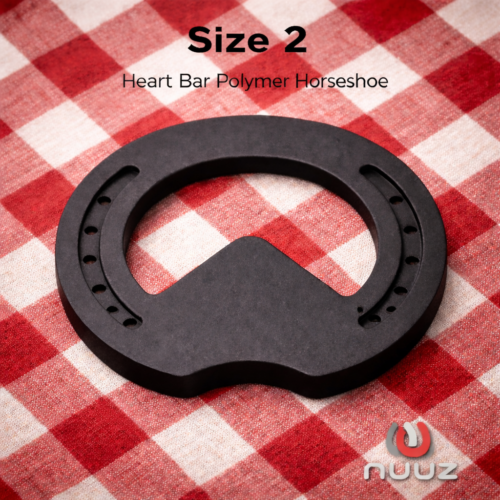
At Nu-Uz, we 3D print custom shoes and variable-density thermoplastic polyurethane (TPU) pads that work together to improve pressure distribution, shock attenuation, and overall comfort. This blog explains the science behind this approach, why mixing materials makes mechanical sense, and how research on hoof biomechanics supports it.
Why Mixing Materials Matters
1. Separate Mechanical Roles: Structure vs Cushioning
In engineering and biomechanics, materials that serve different mechanical functions are rarely the same. Rigid elements provide geometric control and support, while compliant elements absorb shock and distribute load.
Rigid shoe components help:
- Establish precise breakover points
- Maintain hoof alignment
- Support the hoof capsule
Soft cushioning helps:
- Reduce localized pressure spikes
- Protect sensitive structures (e.g., thin soles)
- Attenuate impact forces during gait
This separation of functions mirrors research showing that hoof deformation and strain patterns change with shoe attachment and stiffness; heavier constraint can alter how the hoof expands and distributes load. Studies measuring hoof wall strain confirm that shoe constraint influences deformation and stress patterns that could contribute to discomfort if unaddressed. (McClinchey et al., 2023)
2. TPU Pads Distribute Load More Evenly
Thermoplastic polyurethane (TPU) is versatile:
- It can be printed with variable density gradients
- It provides controlled compliance
- It rebounds under load to reduce pressure peaks
When we 3D print TPU pads tailored to a horse’s hoof geometry and pathology, the result is a custom cushion layer that distributes forces more evenly across the frog and sole. This is consistent with studies on frog-supportive shoes, which have been shown to alter hoof kinetics in a way that suggests improved comfort and load sharing. In one controlled trial involving thermoplastic protective and supportive shoe designs, changes in hoof kinetics were observed that are consistent with greater comfort. (Sleutjens et al., 2018)
3. Modern Polymeric Shoes Preserve Natural Function
A common concern with any shoeing system is whether added materials restrict natural hoof motion. Research comparing modern polymeric glue-on shoes with traditional nailed shoes found no significant difference in total heel movement, suggesting that appropriately designed materials can preserve functional hoof deformation rather than overconstrain it. (Takahashi et al., 2022)
This is important because multi-material systems that incorporate softer pads should not inadvertently limit the hoof’s ability to expand and contract during gait.
3D Printing TPU Pads: What This Allows
Custom Fit to Hoof Geometry
Because we scan and model each hoof individually, 3D printing lets us tailor the pad’s shape to:
- Match the contours of the frog and sole
- Avoid thick pad “bridging” that can create hotspots
- Optimize pad placement under areas of sensitivity
A custom pad is not one-size-fits-all — it is anatomically aligned with the hoof, which can reduce abrupt pressure transitions.
Variable Density for Functional Zoning
We can print TPU with zones of different hardness within the same pad. For example:
- Softer zones under the frog and caudal sole
- Firmer zones near bars or under load-bearing areas
This zonal control allows us to tune responsiveness and comfort simultaneously, something not possible with a single uniform pad material.
Durable and Replaceable
Pads experience wear and compression over time. Because we print them in TPU, they are:
- Durable under repeated load
- Replaceable on a cycle independent from the shoe
- Consistent in mechanical behavior from unit to unit
This modularity lowers long-term cost and allows iterative refinement based on the horse’s feedback.
Realistic, Research-Aligned Benefits
Without overclaiming or medicalizing outcomes, the advantages of this multi-material approach include:
- Improved pressure distribution, supported by evidence that supportive shoe designs alter hoof kinetics. (Sleutjens et al., 2018)
- Targeted shock attenuation, consistent with TPU’s material properties and engineering principles.
- Preserved functional movement, in line with research showing flexible shoe systems can preserve heel motion. (Takahashi et al., 2022)
- Reduced peak stress on sensitive areas, consistent with the general biomechanical consensus that reducing localized stress can improve comfort.
Research Citations
McClinchey HL, et al. (2023). Effect of horseshoe attachment on hoof wall strain and deformation. Journal of the Royal Society Interface.
Sleutjens J, et al. (2018). Effects of frog-supportive thermoplastic shoes on hoof kinetics. Equine Veterinary Journal.
Takahashi T, et al. (2022). Hoof deformation in horses wearing polyurethane glue-on shoes. Journal of Equine Veterinary Science.
Conclusion
Mixing materials in horseshoe systems,especially when your structural component is precisely shaped and matched to the hoof and your cushioning component is a custom 3D-printed, variable-density TPU pad, gives farriers more control over how forces are distributed, how impact is attenuated, and how sensitive structures are protected. Contemporary research in hoof biomechanics supports the logic of this approach, indicating that supportive and flexible designs can influence hoof kinetics and comfort without restricting natural motion.
At Nu-Uz, this multi-material strategy is part of how we work to enhance comfort and support for horses with compromised hooves, grounded in evidence and engineered for function, not just feel.
About the author : Walt Jaeger