How MMA Adhesives Transformed Modern Hoof Care
Rebuilding Compromised Hooves and Improving Equine Comfort
For decades, traditional hoof care relied primarily on metal shoes and nails to protect and support the horse’s foot. While effective for many healthy horses, this approach often presents challenges for horses with:
- Laminitis (founder)
- White line disease
- Thin or brittle hoof walls
- Chronic hoof distortion
- Poor nail retention
- Navicular-type heel pain
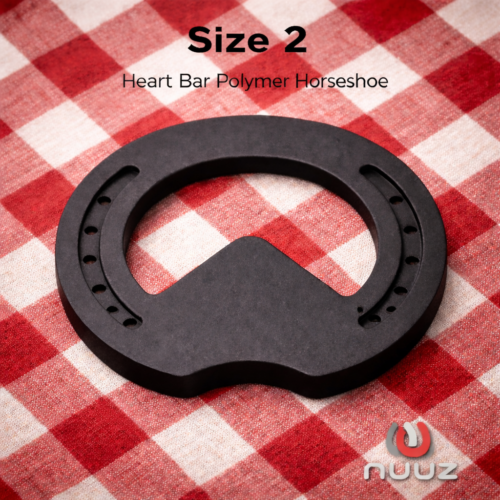
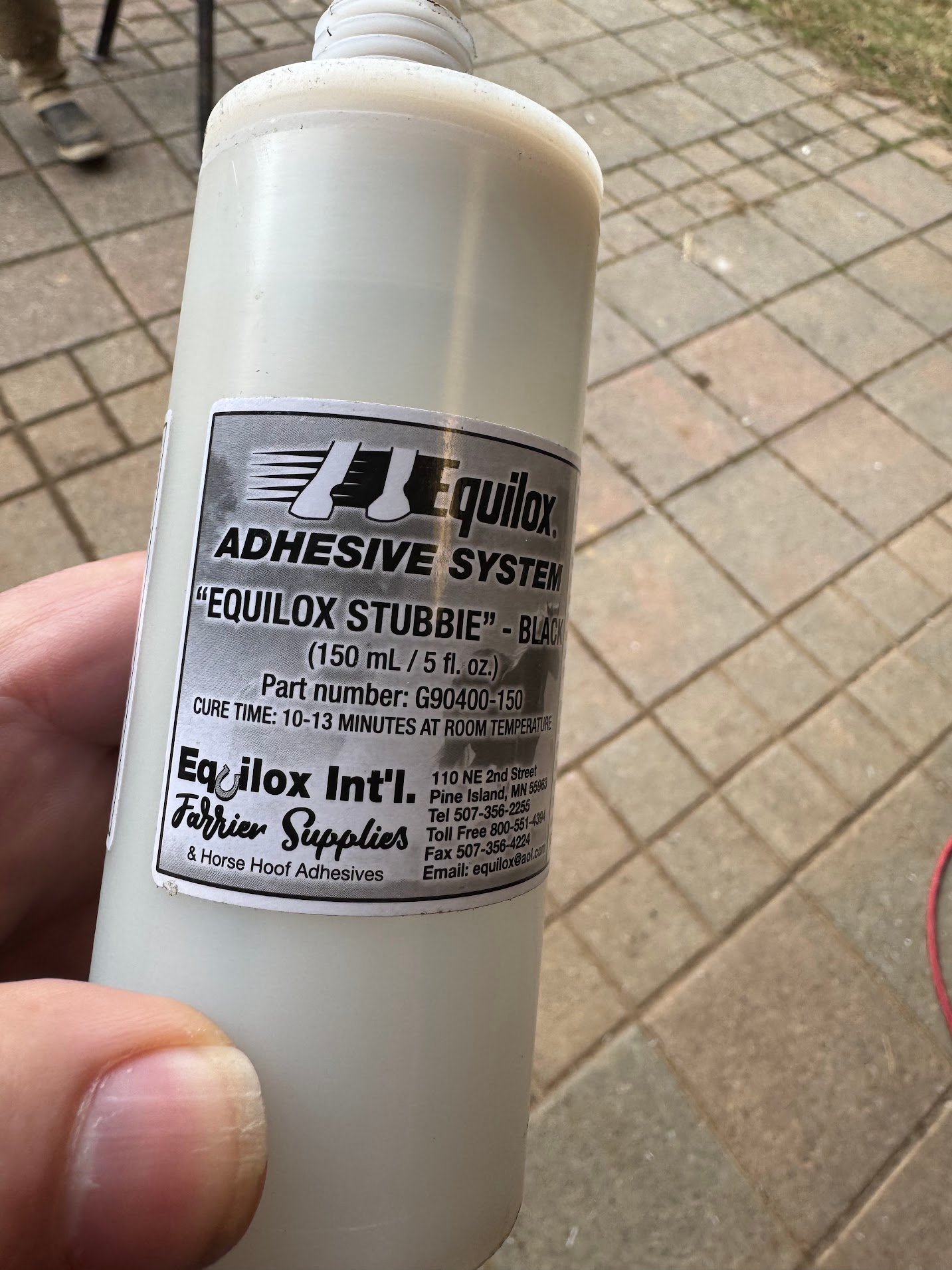
The introduction of methyl methacrylate (MMA)–based hoof adhesives has significantly expanded what farriers and veterinarians can do for these compromised hooves. MMA adhesives allow therapeutic shoes, cuffs, extensions, and support structures to be bonded without nail penetration, improving mechanical support while preserving fragile hoof walls.
What Is MMA and Why It Matters in Hoof Care
MMA (methyl methacrylate) is a fast-curing acrylic adhesive widely used in medical, dental, and industrial applications. In equine hoof care, MMA adhesives are formulated to:
- Bond strongly to keratin (hoof horn)
- Cure quickly in field conditions
- Maintain strength in wet or dirty environments
- Support load-bearing attachments
This makes MMA uniquely suited for attaching therapeutic hoof devices to compromised hooves where nails may be unsafe or ineffective.
Rebuilding Compromised Hooves Without Nails
Preserving Fragile Hoof Walls
In horses with laminitis or white line disease, the hoof wall is often:
- Structurally weakened
- Prone to cracking and separation
- Unable to hold nails securely
Driving nails into compromised horn can worsen wall damage and increase infection risk. MMA adhesives eliminate nail penetration, allowing farriers to:
- Preserve remaining wall integrity
- Avoid creating new mechanical stress points
- Reduce the risk of wall separation
Veterinary literature describes how laminar damage reduces hoof wall strength and nail-holding capacity (Pollitt, 2004; O’Grady & Poupard, 2003).
Enabling Structural Reinforcement
MMA adhesives allow the attachment of:
- Fabric cuffs
- Composite shells
- Therapeutic extensions
- Support structures
These elements can help stabilize distorted hoof capsules without relying on weakened horn. A clinical study evaluating an indirect glue-on shoe system found a reduction in dorsal hoof wall deviation, suggesting improved capsule alignment over time (Reilly et al., 2009).
This capability is especially valuable for horses recovering from laminitis, where capsule distortion can persist long after the acute phase.
Improved Comfort Through Mechanical Support
Reducing Localized Stress
Compromised hooves are more sensitive to:
- Impact forces
- Uneven load distribution
- Concentrated pressure points
MMA-bonded systems allow farriers to incorporate:
- Frog support
- Sole protection
- Heel stabilization
- Customized breakover
Research on frog-supportive thermoplastic shoes has shown measurable changes in hoof kinetics consistent with improved comfort in high-risk horses (Sleutjens et al., 2018).
By enabling these designs without nail trauma, MMA adhesives help reduce mechanical stress on painful structures.
Preserving Functional Hoof Movement
Earlier concerns suggested glued systems might restrict natural hoof motion. However, modern polymer-based glue-on shoes bonded with adhesives like MMA have been shown to preserve heel movement comparable to nailed shoes in controlled studies (Takahashi et al., 2022).
This indicates that properly designed adhesive systems can support the hoof without over-constraining its natural function.
Better Outcomes for Hard-to-Shoe Horses
Some horses simply cannot tolerate nails due to:
- Pain
- Thin walls
- Crumbling horn
- Repeated nail failure
MMA adhesives provide a reliable alternative for:
- Maintaining shoe retention
- Avoiding repeated wall trauma
- Supporting long-term rehabilitation
This reduces the cycle of shoe loss, wall damage, and repeated resets that often frustrate owners and compromise the horse’s comfort.
Impact on Quality of Life
While MMA adhesives are not a medical treatment, they play a meaningful role in supporting horses with chronic hoof challenges by:
- Reducing pain during shoe application
- Improving mechanical stability
- Enabling therapeutic support designs
- Minimizing wall damage
- Supporting more consistent comfort
For many horses, this translates into:
- Easier movement
- Reduced reliance on medication
- Greater willingness to walk and graze
- Improved daily comfort
Quality of life is not just about soundness, it is about how comfortably a horse can live and move each day.
MMA in Modern Therapeutic Farriery
Today, MMA adhesives are commonly used in:
- Glue-on shoes
- Hoof wall reconstruction
- Therapeutic cuffs
- Composite reinforcement
- Emergency shoeing
- Post-surgical hoof protection
They have become a standard tool in advanced therapeutic farriery because they expand what is mechanically possible when the hoof wall cannot safely support nails.
Important Limitations
MMA adhesives are not a cure for:
- Laminitis
- Metabolic disease
- Navicular pathology
- Structural hoof deformities
They are a supportive technology, not a medical solution. Long-term outcomes still depend on:
- Veterinary care
- Diet management
- Trimming strategy
- Environmental conditions
- Overall health
FAQ: MMA Adhesives in Modern Hoof Care
What is MMA in hoof care?
MMA is a fast-curing acrylic adhesive used to bond shoes and support structures to the hoof wall without nails.
Are MMA adhesives safe for horses?
When used correctly by trained professionals, MMA adhesives are widely used in therapeutic hoof care.
Can MMA rebuild damaged hooves?
MMA itself does not heal tissue, but it allows reinforcement structures to stabilize and protect compromised hooves.
Are glue-on shoes as strong as nailed shoes?
Modern MMA-bonded systems can provide comparable retention in many therapeutic situations.
Do MMA systems improve comfort?
They allow designs that distribute load more evenly and protect sensitive structures, which can improve comfort.
Is MMA a treatment for laminitis or navicular disease?
No. MMA supports mechanical management but does not treat the underlying disease.
Why not just use metal shoes?
Metal shoes rely on nails and provide no cushioning. MMA allows nail-free attachment and more flexible support designs.
Can MMA be used with soft materials?
Yes. MMA bonds well to composite and polymer materials, enabling multi-material support systems.
Final Takeaway
MMA adhesives have transformed modern hoof care by enabling:
- Nail-free attachment to compromised hooves
- Structural reinforcement without wall trauma
- Advanced therapeutic shoe designs
- Better mechanical support for painful feet
- Improved comfort and stability
For horses with fragile hoof walls, laminitic changes, or chronic hoof challenges, MMA adhesives have expanded treatment options and helped many horses maintain a better quality of life.
References
Pollitt CC (2004). Equine laminitis: A revised pathophysiology. Equine Veterinary Journal.
O’Grady SE & Poupard DA (2003). Physiology, pathology, and therapeutic principles of the equine hoof wall. Vet Clin North Am Equine.
Reilly P et al. (2009). Reduction of dorsal hoof wall deviation using an indirect glue-on shoe system. Journal of Equine Veterinary Science.
Sleutjens J et al. (2018). Effects of frog-supportive thermoplastic shoes on hoof kinetics. Equine Veterinary Journal.
Takahashi T et al. (2022). Hoof deformation in horses wearing polyurethane glue-on shoes. Journal of Equine Veterinary Science.
Call to Action
Looking for a more supportive, hoof-friendly approach for a compromised horse?
At Nu-Uz, we work with farriers and horse owners to design custom, nail-free hoof solutions using modern materials, including MMA-bonded systems and 3D-printed support components. Our focus is on mechanical fit, comfort, and responsible application, not one-size-fits-all shoeing.
If your horse is dealing with:
- Laminitic changes
- White line disease
- Thin or fragile hoof walls
- Chronic hoof pain
- Poor nail retention
We’re here to discuss custom, evidence-aligned options that prioritize comfort and long-term hoof health.
Contact us to learn more about modern, nail-free hoof support solutions.
About the author : Walt Jaeger