Understanding Hoof Pain, Comfort, and How Modern Shoe Design Can Help
Your horse can’t tell you when something hurts.
They don’t point to sore spots.
They don’t describe pressure or stiffness.
They don’t explain when walking becomes uncomfortable.
Instead, they show us in quiet ways:
- Shortened strides
- Reluctance to move
- Changes in attitude
- Weight shifting
- Subtle lameness
- Sensitivity on certain surfaces
Often, these signs start with the hooves.
Because no matter how strong, athletic, or willing a horse is, their comfort depends on four relatively small structures that carry their entire body weight – every step, every day.
Hoof Pain Isn’t Always Obvious
Some hoof problems announce themselves loudly: abscesses, acute laminitis, severe lameness.
Others are quieter:
- Thin soles
- White line separation
- Mild laminitic changes
- Heel pain
- Hoof wall weakness
- Capsule distortion
These issues can cause ongoing discomfort without dramatic symptoms. A horse may still walk, still eat, still behave “normally”; while feeling persistent, low-grade pain.
And because horses are prey animals, they’re very good at hiding discomfort.
Why Compromised Hooves Hurt More
A healthy hoof is strong, balanced, and able to absorb impact naturally.
A compromised hoof is often:
- Structurally weaker
- More sensitive to pressure
- Less able to distribute weight evenly
- More vulnerable to impact and uneven loading
Conditions like laminitis, white line disease, and chronic heel pain weaken the internal structures of the hoof. This makes every step more demanding on tissues that are already stressed.
Even when a horse isn’t visibly lame, these forces can still cause discomfort.
Traditional Metal Shoes Aren’t Always the Best Fit
Metal shoes have been used for centuries and work well for many healthy horses.
But for compromised hooves, they can present challenges:
- They rely on nails, which can stress weak hoof walls
- They are rigid and don’t provide cushioning
- They have fixed shapes that may not match distorted hooves
- They concentrate pressure along narrow contact areas
For sensitive or damaged hooves, this can mean:
- More pressure on painful areas
- Slower comfort improvement
- Greater stress on fragile structures
That doesn’t mean metal shoes are “bad”, just that not every hoof needs the same solution.
How Glue-On, 3D-Printed Shoes Change the Approach
Modern hoof care has evolved.
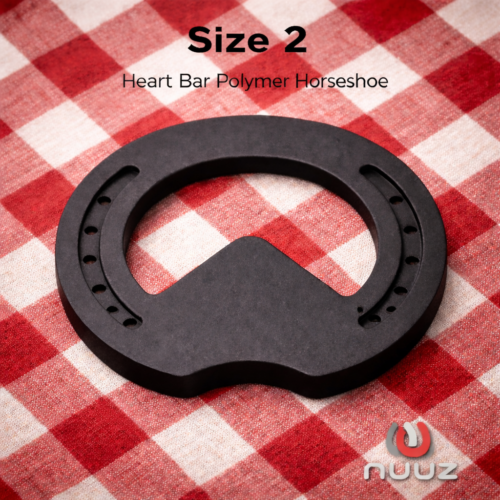
Glue-on shoes, bonded with advanced adhesives instead of nails, allow shoes to be attached without penetrating the hoof wall. When combined with 3D printing, they can also be:
- Shaped to match your horse’s exact hoof
- Designed around existing distortions
- Tuned for breakover and support
- Paired with soft support materials
This means the shoe can support the hoof instead of forcing the hoof to adapt to the shoe.
Why Custom Fit Matters for Comfort
Every horse’s hooves are different, and compromised hooves are especially unique.
A custom 3D-printed shoe can be designed to:
- Match your horse’s true hoof geometry
- Reduce pressure in sensitive areas
- Support the frog and heel
- Optimize breakover
- Stabilize weak capsules
Small mechanical improvements can make a big difference in how comfortable a horse feels during everyday movement.
Less Wall Trauma, Less Hidden Discomfort
Glue-on systems avoid nail holes, which is important for horses with:
- Thin or brittle walls
- White line disease
- Cracks or separation
- Laminitic changes
Preserving hoof wall integrity helps prevent additional stress and reduces the chance of ongoing discomfort from wall damage.
Comfort Isn’t Just About Soundness
A horse doesn’t need to be “lame” to be uncomfortable.
Quality of life is about:
- How willingly they move
- How relaxed they stand
- How confidently they walk
- How easily they turn
- How comfortable they feel on different footing
When hooves are better supported and less stressed, many horses simply move more freely and comfortably.
What Your Horse Can Show You
When hoof comfort improves, owners often notice:
- Longer, more relaxed strides
- Less hesitation on hard or uneven ground
- Improved posture while standing
- Brighter attitude
- More willingness to move
These are the quiet signs of a horse that feels better, even if they can’t tell you in words.
A Thoughtful, Modern Option for Sensitive Hooves
Glue-on, 3D-printed shoes aren’t a cure for:
- Laminitis
- Metabolic disease
- Navicular pathology
But they are a supportive tool that allows hoof care to be:
- More customized
- Less invasive
- More adaptable
- More comfort-focused
For horses with sensitive, compromised, or difficult-to-shoe hooves, this approach can help reduce mechanical stress and support better daily comfort.
Final Takeaway
Your horse can’t tell you when something hurts.
But their hooves carry the story, in how they move, stand, and live each day.
Modern glue-on, 3D-printed shoes give owners and farriers more options to support:
- Fragile hooves
- Sensitive structures
- Distorted capsules
- Ongoing comfort
Because when the hoof feels better, the whole horse often does too.
FAQ (For Owners)
Is my horse in pain even if they aren’t lame?
Possibly. Horses often hide discomfort, especially from chronic hoof issues.
Are glue-on shoes better than metal shoes?
They’re not better for every horse, but they offer advantages for compromised or sensitive hooves.
Do 3D-printed shoes last?
We have typically seen resets between 4-6 weeks, depending on activity level, comparable to normal shoes.
Will this fix my horse’s condition?
No. These systems support comfort and mechanics but don’t cure underlying disease.
Call to Action
Concerned about your horse’s hoof comfort?
If your horse has:
- Sensitive or fragile hooves
- Chronic hoof issues
- Trouble holding traditional shoes
- Subtle changes in movement
Modern glue-on, custom-fit shoeing may be worth exploring.
Talk with your farrier or veterinary professional about options that focus on comfort, fit, and long-term hoof health — not just tradition.
About the author : Walt Jaeger